
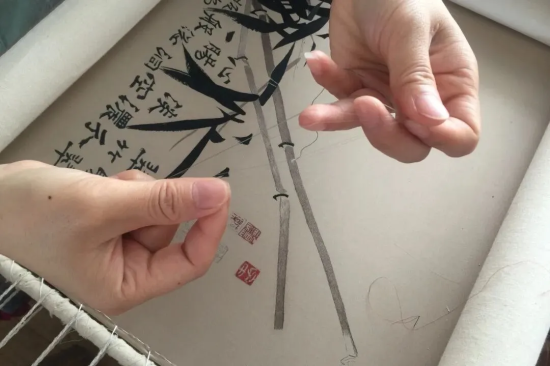
提到“刺绣”,相信每位朋友都知道,今天咱就来聊聊上海刺绣界的“天花板”——顾绣,它不仅能把一根线“分身”256次,还能把宋元名画绣得比原作还让人惊艳!
When it comes to “embroidery,” most people are familiar with the term. Today, let’s dive into the world of Shanghai embroidery’s “ceiling” — Gu Embroidery. This craft is not only capable of splitting a single thread into 256 strands, but it can also bring ancient Song and Yuan dynasty paintings to life, often surpassing the original works in sheer beauty!
一根线的“极限操作”:
细如发丝还能再“分裂”
The “Extreme” Operation of a Single Thread:
As Fine as a Hair and Still Splitting
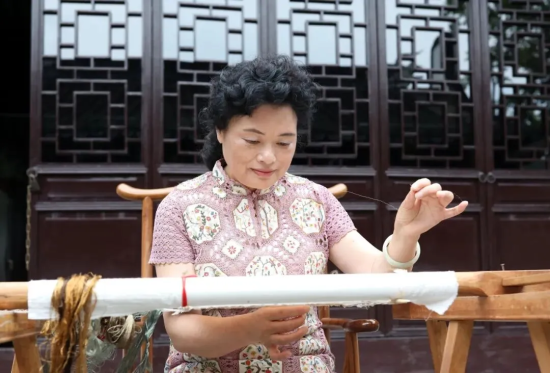
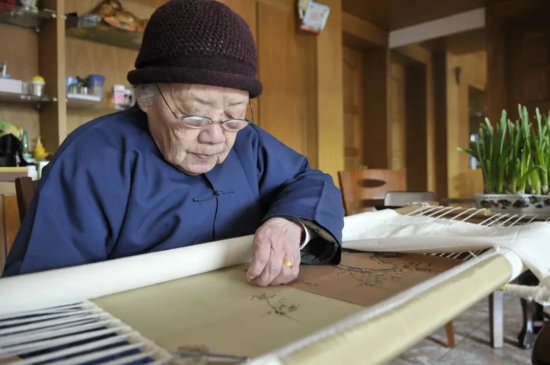
在上海松江的顾绣工作室里,国家级非遗传承人钱月芳老师傅正上演着“丝线分身大法”。只见她手指轻捻一根蚕丝线,那动作就像武侠片里高手运功一样,接着用小拇指指甲轻轻一挑,“唰”一下,丝线瞬间裂成两半!可这还没完,每半根里还藏着8股更细的丝呢。更绝的是,这根线能继续“分裂”成1/32、1/64,甚至1/256份!
In the Gu Embroidery studio in Songjiang, Shanghai, Master Qian Yuefang, a national-level intangible cultural heritage inheritor, is demonstrating the “Silk Thread Splitting Technique”. She lightly twists a silk thread with her fingers, a movement akin to the elegant gestures of a martial arts master, before using her pinky nail to gently flick it. In an instant, the thread splits into two halves! But that’s not the end—each half hides another 8 thinner threads. Even more impressive, this thread can continue to split into 1/32, 1/64, and even 1/256 parts!
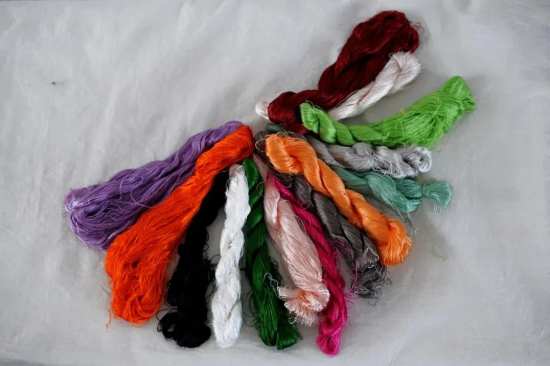
细到什么程度?有人这么形容:“放在纸上都得眯着眼找,风一吹能飘走!”
How fine is it? Some describe it as: “It’s so tiny you’d have to squint to see it, and it could fly away with the slightest breeze!”
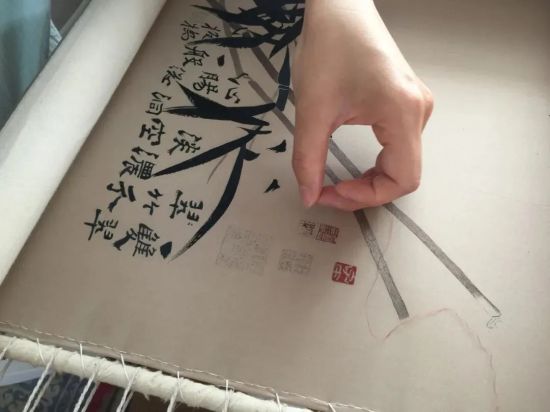
这就是顾绣传承千年的独门绝技——劈丝。“所以我们这一行入职,对裸眼视力也是有要求的。”钱师傅说,劈开的丝线可以用于绣制一些金鱼尾巴等细节位置。作为对丝线“解剖”的劈丝,靠的是巧劲和对丝线的熟悉,新接触顾绣的绣娘,往往要一年后才能上手劈丝。
This is the century-old secret technique of Gu Embroidery: Splitting Silk. “That’s why we have strict requirements for naked-eye vision when starting in this craft”, says Master Qian. The split threads are often used to embroider fine details like fish tails. This silk “dissection” relies on skill and familiarity with the thread, and new embroiderers typically need a year of practice before they can master it.
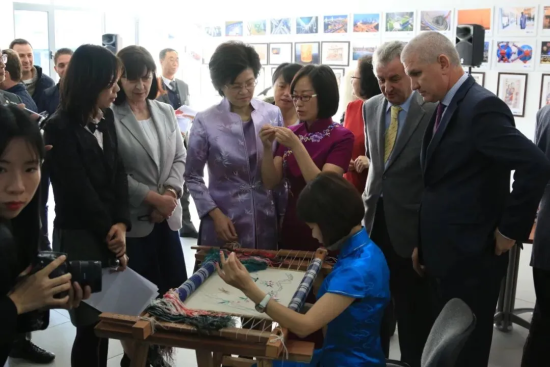
曾经有人现场挑战,结果手忙脚乱半天,线倒是劈开了,可粗细不均,活像被老鼠啃过。钱师傅当年为了练这手,绣了100对结婚枕套,绣得都快成‘枕套专业户’了!”
Once, someone attempted the technique in front of the master. Though they managed to split the thread, the results were uneven and clumsy, like it had been chewed by a mouse. To perfect this skill, Master Qian once embroidered 100 pairs of wedding pillowcases, joking that she nearly became a “pillowcase specialist” in the process!
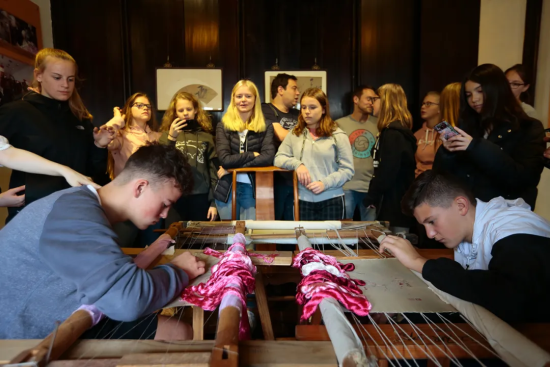
顾绣的“前世传奇”:
从闺阁秘技到皇家贡品
The “Legendary Past” of Gu Embroidery:
From Secret Arts to Imperial Tribute
顾绣的“身世”才叫精彩。明朝嘉靖年间,上海露香园里住着个爱艺术的顾氏家族。某天,顾家媳妇缪氏闲来无事,突发奇想:为啥不能把画画和刺绣结合呢?于是她拿起针线,照着宋元名画绣了起来。这一绣可不得了,绣出的作品比原画还灵动,连大画家董其昌看了都惊叹:“这哪是刺绣?分明是画在布上的水墨,太绝了!”
The history of Gu Embroidery is as fascinating as its technique. During the Ming Dynasty under Emperor Jiajing, in the Lu Xiang Yuan area of Shanghai, the Gu family, known for its passion for art, witnessed a groundbreaking moment. One day, Madame Miao, a member of the family, came up with an idea: “Why not combine painting and embroidery?” She picked up her needle and thread and started embroidering based on Song and Yuan paintings. The results were remarkable—her works were even more vivid than the original paintings! The famous artist Dong Qichang, upon seeing them, was so amazed he exclaimed, “This is not embroidery! This is ink painting on fabric, it’s incredible!”
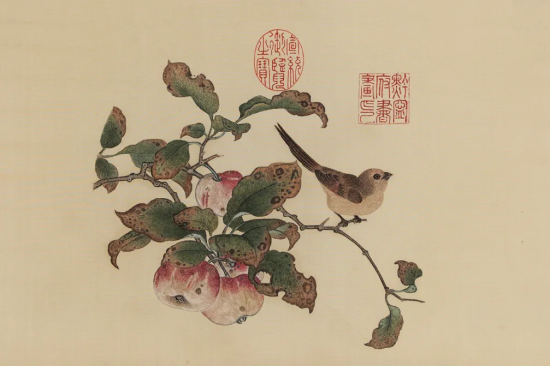
到了顾名世的孙媳妇韩希孟手里,顾绣直接“开挂”。这位才女不仅绣工了得,还把笔墨意趣融入丝线,绣出的山水、人物、花鸟,可以说是栩栩如生。故宫博物院至今还藏着她的《洗马图》《白鹿图》。
When Gu Ming’s granddaughter, Han Ximeng, took over, Gu Embroidery reached new heights. Not only was she an expert embroiderer, but she also infused the artistic spirit of brush and ink into her silk threads. Her embroidered landscapes, figures, and flowers seemed to come to life. The Palace Museum still holds her works, such as The Washing Horse and White Deer.
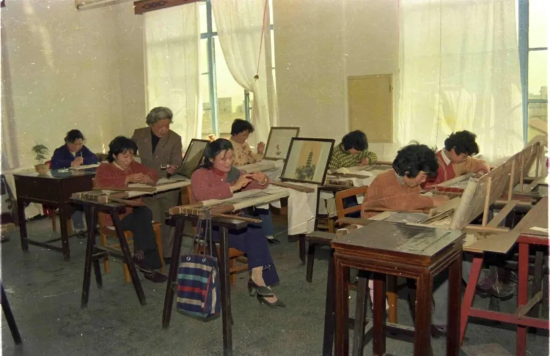
清代时,顾绣更是火出圈。顾家曾孙女顾兰玉为了传承技艺,开班授课,松江城“百里之地无寒女”,连达官贵人都排队求购。据《松江府志》记载,当时顾绣“价昂工巧,争相购求”,一件作品能卖到几十两银子,比普通绣品贵好几倍。可惜后来因战乱几近失传,直到1972年,顾绣才在松江工艺品厂“复活”,重新走进了大众视野。
In the Qing Dynasty, Gu Embroidery became even more famous. Gu Lanyu, the great-granddaughter of the Gu family, started teaching the craft to pass it down. The demand for her work was so high that people from all walks of life, even high-ranking officials, queued to buy her pieces. According to the Songjiang Prefecture Gazetteer, at the time, Gu Embroidery was “expensive and exquisite”, and a single piece could fetch several tens of taels of silver, several times the price of ordinary embroidery. Unfortunately, the craft nearly disappeared due to wars, but in 1972, Gu Embroidery was “revived” in the Songjiang Craft Factory, and it re-entered the public eye.
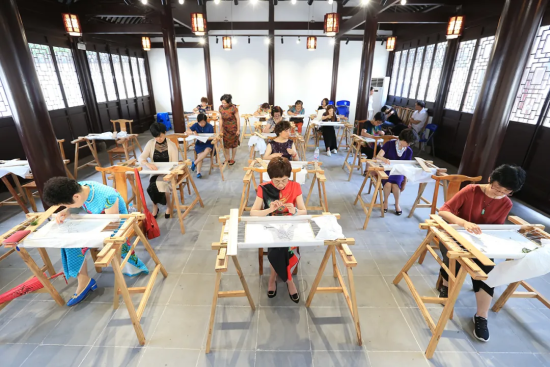
绣娘们的“神仙操作”:
用针线“复刻”名画
The “Magical” Skills of the Embroiderers:
Using Thread and Needle to “Recreate” Masterpieces
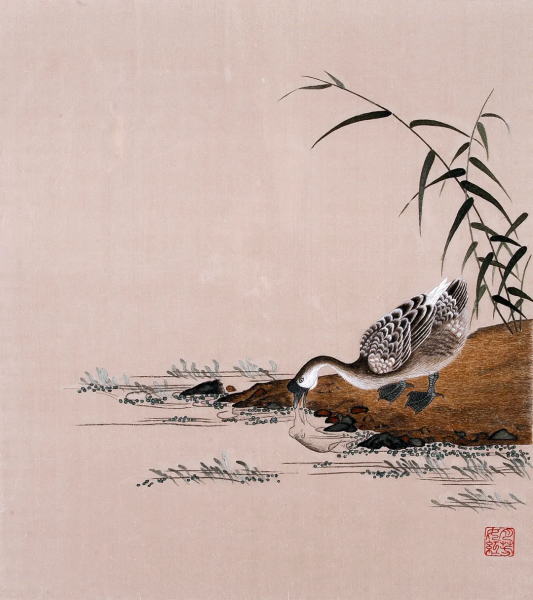
顾绣的“硬核”之处,在于它把刺绣玩成了“高精度3D打印”。绣娘们先得是“画家”——得能读懂宋元名画的笔墨韵味;再得是“物理学家”——得算准丝线颜色怎么叠加才能还原原画的层次感;最后还得是“魔术师”——用10多种针法(比如齐针、滚针、刻鳞针)模拟出笔墨的浓淡干湿。
What makes Gu Embroidery truly extraordinary is its precision—it’s like a high-definition 3D printing technique for embroidery. Embroiderers must first be “painters”—they need to understand the brushwork and ink styles of ancient Song and Yuan paintings. Next, they must be “physicists”—calculating how to layer thread colors to replicate the depth of the original painting. Finally, they must be “magicians”, using over ten different stitching techniques (like “straight stitch”, “rolling stitch”, and “scales stitch”) to imitate the subtle variations in ink intensity and texture.
《韩希孟绣宋元名迹册》,是顾绣的代表作之一。册页里的每一幅绣品都精致得让人叹为观止,比如《米画山水图》,刺绣家用丝线绣出了米芾山水画的笔墨韵味,山峦的起伏、云雾的缭绕,都绣得栩栩如生,仿佛下一秒就要从画里走出来似的。对页还有名家董其昌题的诗:“南宫颠笔,夜来神针。丝墨合影,山远云深。泊然幽赏,谁入其林。徘徊延伫,闻有啸音。”
One of Gu Embroidery’s masterpieces is the Han Ximeng Embroidery of Song and Yuan Masterpieces. Each piece in this collection is so exquisite it will leave you speechless. For instance, in Mi Fu’s Mountain Landscape, the embroiderer has captured the brushwork and rhythm of Mi Fu’s painting—mountains rise and fall, clouds swirl, and the entire scene seems so lifelike that it feels as if it might step out of the fabric at any moment. On the facing page, a poem by the renowned artist Dong Qichang reads: “The brush of Nanjing’s peak, the needle of the night. Silk and ink unite, the mountains stretch, the clouds deepen. Pause and quietly admire, who enters the forest? Wandering and hesitating, the sound of a whistle is heard.”
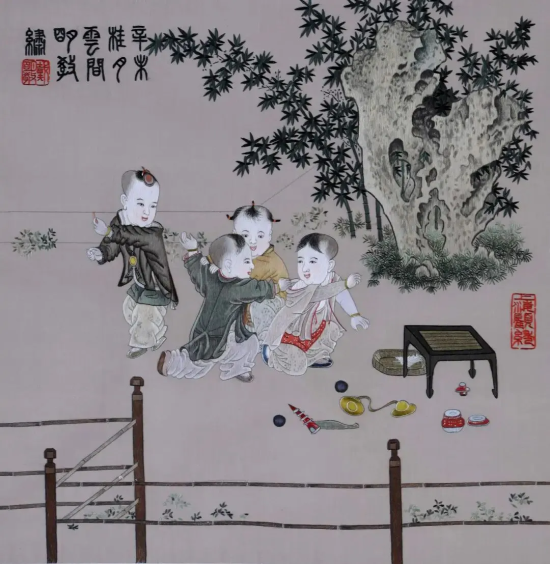
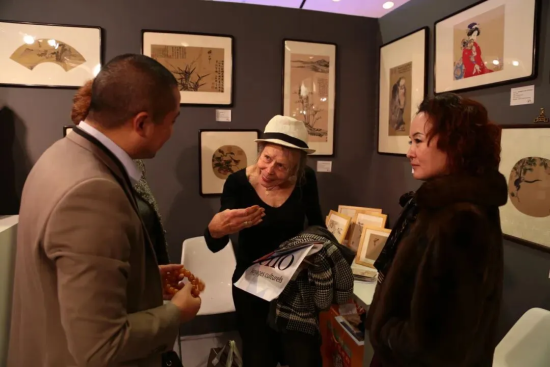
别以为顾绣只是“老古董”,它现在可潮着呢!更厉害的是,顾绣还成了中外文化交流的“使者”。它曾跟着“上海之帆”经贸团去中东欧巡展,在当地掀起“中国风”!
Don’t think Gu Embroidery is just an “old-fashioned” art—it’s still trendy today! Even more impressive, Gu Embroidery has become a cultural ambassador between China and the world. It has been part of the “Shanghai Sail” trade mission, touring Eastern and Central Europe, where it stirred up a “Chinese style” sensation.
这根能劈256份的丝线,其实藏着中国人的智慧:再细的线,也能织就大千世界;再小的技艺,也能传承千年文化。
This thread, which can split into 256 parts, holds the wisdom of the Chinese people: no matter how fine the thread, it can weave the vast world; no matter how small the skill, it can carry forward a thousand-year-old culture.
注:请在转载文章内容时务必注明出处!
编辑:王丹沁