
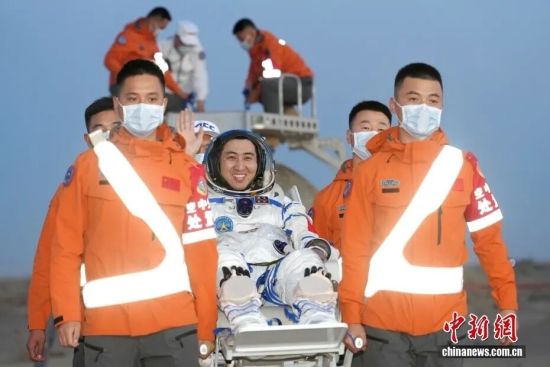
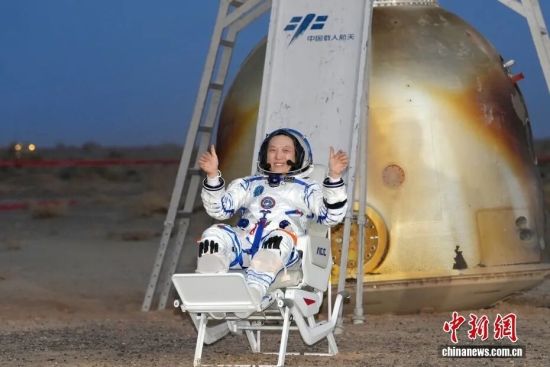
2026年5月29日20时11分,东风着陆场的夜幕中,一朵红白相间的降落伞徐徐展开——神舟二十二号载人飞船返回舱稳稳落地,舱内是阔别地球210天的航天员张陆、武飞、张洪章。三位“太空出差”的航天员刷新了中国航天员乘组在轨驻留最长纪录,也为自己长达7个月的空间站之旅画上了圆满句号。
At 8:11 p.m. on May 29, 2026, beneath the night sky over the Dongfeng Landing Site, a red-and-white parachute slowly blossomed above the desert. Moments later, the return capsule of China’s Shenzhou-22 crewed spacecraft touched down safely, carrying astronauts Zhang Lu, Wu Fei, and Zhang Hongzhang back to Earth after 210 days in orbit. The three astronauts not only completed a successful seven-month mission aboard China’s space station but also set a new record for the longest continuous stay in orbit by a Chinese astronaut crew.
神舟二十二号:一次特殊的“代驾”回家
Shenzhou-22: An Unusual Ride Home
这次回家之路有些特别:从空间站接航天员回家的,并不是送他们“上天”的那艘飞船。
This journey home was a little different from previous missions. The spacecraft that brought the astronauts back to Earth was not the same one that had originally carried them into space.
神舟二十一号乘组于2025年11月首次应用了三圈快速返回方案,全程约5.5小时,飞行过程平稳顺畅。与以往不同的是,这艘飞船最初是以无人状态发射的——2025年11月25日,神舟二十二号仅用16天完成常规需110天的准备工作,以无人状态应急发射至空间站,创下了中国载人航天应急发射的新纪录。
The Shenzhou-21 crew was the first to use China’s new three-orbit rapid return procedure in November 2025, reducing the trip from space station departure to landing to approximately 5.5 hours. The mission proceeded smoothly and demonstrated the effectiveness of the new approach. Even more remarkable was how the spacecraft itself arrived at the space station. On November 25, 2025, Shenzhou-22 was launched as an uncrewed emergency mission after completing preparations in just 16 days—far shorter than the roughly 110 days typically required. The achievement set a new record for China’s human spaceflight emergency launch capability.
在返回技术上,神舟二十二号同样采用了三圈自主快速返回方案。从空间站撤离后,飞船独立飞行约4.5小时,之后进入返回程序,整个着陆过程约50分钟。从最早神舟一号至神舟十二号的11圈返回方案(绕地飞行超18小时),到神舟十三号的5圈方案(约9小时),再到如今的三圈快速返回方案,航天员的回家之路越来越快、越来越舒适。
For its return journey, Shenzhou-22 also employed the three-orbit autonomous rapid return system. After undocking from the space station, the spacecraft flew independently for about 4.5 hours before initiating re-entry procedures. The final descent and landing took approximately 50 minutes. China’s return technology has advanced dramatically over the years. Early missions from Shenzhou-1 through Shenzhou-12 used an 11-orbit return profile, requiring more than 18 hours in Earth orbit before landing. Shenzhou-13 reduced this to five orbits, or roughly nine hours. Today’s three-orbit rapid return system allows astronauts to get home faster and more comfortably than ever before.
在空间站,大家都在忙什么?
What Do Astronauts Do During More Than 200 Days in Space?
大家是不是也好奇:航天员在中国空间站生活200多天,到底都在做什么?
Many people wonder what astronauts actually do while spending more than 200 days aboard the Chinese Space Station.
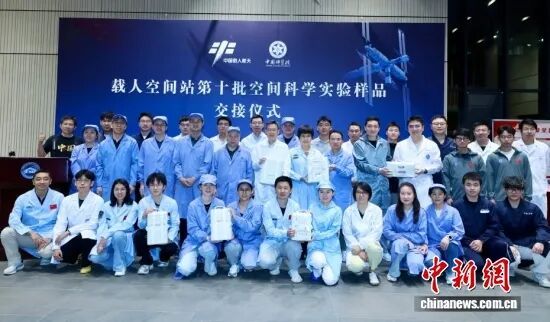
答案其实很丰富。空间站首先是“太空实验室”。神舟二十二号本次带回的货物中,包含生命科学类、材料类、燃烧类共23项实验项目的科学样品,这些样品包括人工胚胎、脑类器官等,科学家后续将对它们进行组织形貌、化学成分等方面的分析,研究微重力对材料生长、成分偏析等方面的影响规律。
The answer is: quite a lot. First and foremost, the station serves as a space laboratory. Among the cargo returned by Shenzhou-22 were scientific samples from 23 experiments spanning life sciences, materials science, and combustion research. These samples included artificial embryos and brain organoids. Scientists will now conduct detailed analyses of their structures and chemical compositions to better understand how microgravity affects biological development, material growth, and component segregation.
除了做实验,航天员在空间站里的生活也要安排得井井有条。中国空间站专门设置了睡眠区、卫生区,配备了太空跑台、太空自行车、拉力器等锻炼设备,以及热风机、微波炉、热水器等太空厨房设施。太空环境与地面差异巨大——喝水、洗漱、睡觉这些在地球上再简单不过的事情,在失重环境下都需要特别的设备和技巧。
Life aboard the station also requires careful planning and organization. China’s space station is equipped with dedicated sleeping quarters and hygiene facilities, as well as exercise equipment such as a treadmill, stationary bicycle, and resistance-training devices. Astronauts also have access to kitchen facilities including a hot-air food warmer, microwave oven, and water heater. The space environment differs greatly from life on Earth. Everyday activities such as drinking water, washing up, and sleeping become surprisingly complex in microgravity, requiring specialized equipment and techniques.
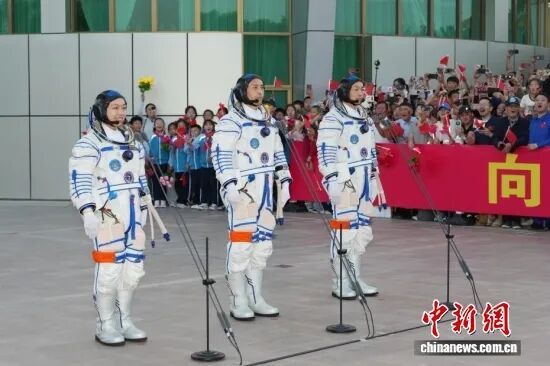

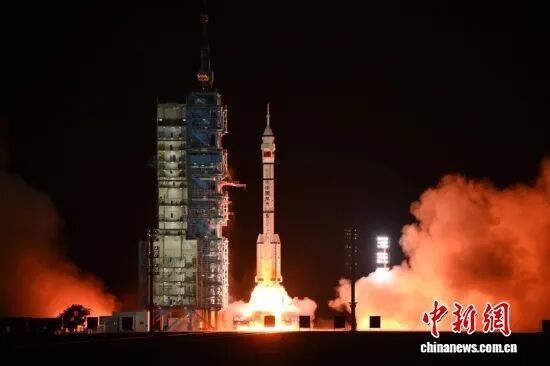
新的“太空三人组”已出发。就在神舟二十二号返回前不久,2026年5月24日23时08分,神舟二十三号载人飞船在酒泉卫星发射中心成功发射。
Meanwhile, a new crew has already begun its own journey. Shortly before Shenzhou-22’s return, the Shenzhou-23 crewed spacecraft successfully launched from the Jiuquan Satellite Launch Center at 11:08 p.m. on May 24, 2026, carrying China’s next team of astronauts into orbit.
上海与航天:你不知道的那些“太空之吻”
Shanghai and Spaceflight: The Hidden Story Behind the “Space Kiss”
上海不只是一座摩登都市,在中国载人航天事业中,上海同样扮演着不可或缺的重要角色。
Shanghai is known worldwide as a modern metropolis, but it also plays a crucial role in China’s human spaceflight program.
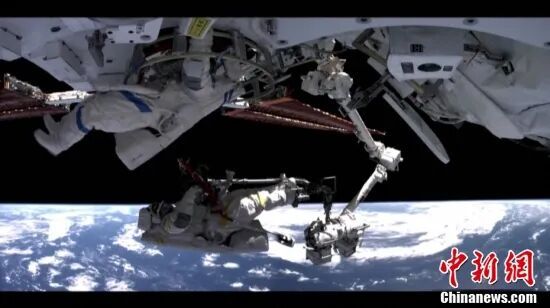
大家听说过“太空之吻”吗?在浩瀚的太空中,飞船要与空间站精准对接,就像两节高铁车厢在高速行驶中挂在一起——难度可想而知。这项关键技术——“交会对接”,正是由上海航天技术研究院的科研团队研制成功的。
Have you ever heard the phrase “space kiss”? In orbit, a spacecraft must dock with a space station with extraordinary precision. Imagine two high-speed train cars connecting while moving at tremendous speed—that gives some sense of the challenge involved. This critical capability, known as rendezvous and docking, was developed by researchers at the Shanghai Academy of Spaceflight Technology.
1995年,上海航天技术研究院组建对接机构研制队伍时,面临的是国外严密的技术封锁,研发几乎是从零起步。既没有技术支援,又没有经验可循,团队依靠的是自力更生的信念——“要做中国人自己的对接机构”。
When the academy formed its docking-system development team in 1995, it faced strict international technology restrictions. With little external support and few precedents to follow, the project essentially started from scratch. Driven by the determination to build China’s own docking technology, the team persevered through years of research and development.
在科研人员的带领下,经过持续攻关,上海航天研制的对接机构目前已圆满完成36次交会对接任务,为空间站的建造及运营保驾护航。
Under the leadership of scientists such as Dr. Zhang Chongfeng, the Shanghai-developed docking system has now successfully completed 36 rendezvous and docking missions, providing vital support for both the construction and operation of China’s space station.
注:请在转载文章内容时务必注明出处!
编辑:王丹沁